

Kids' Sunglasses Size Chart by Age (Baby to Teen)
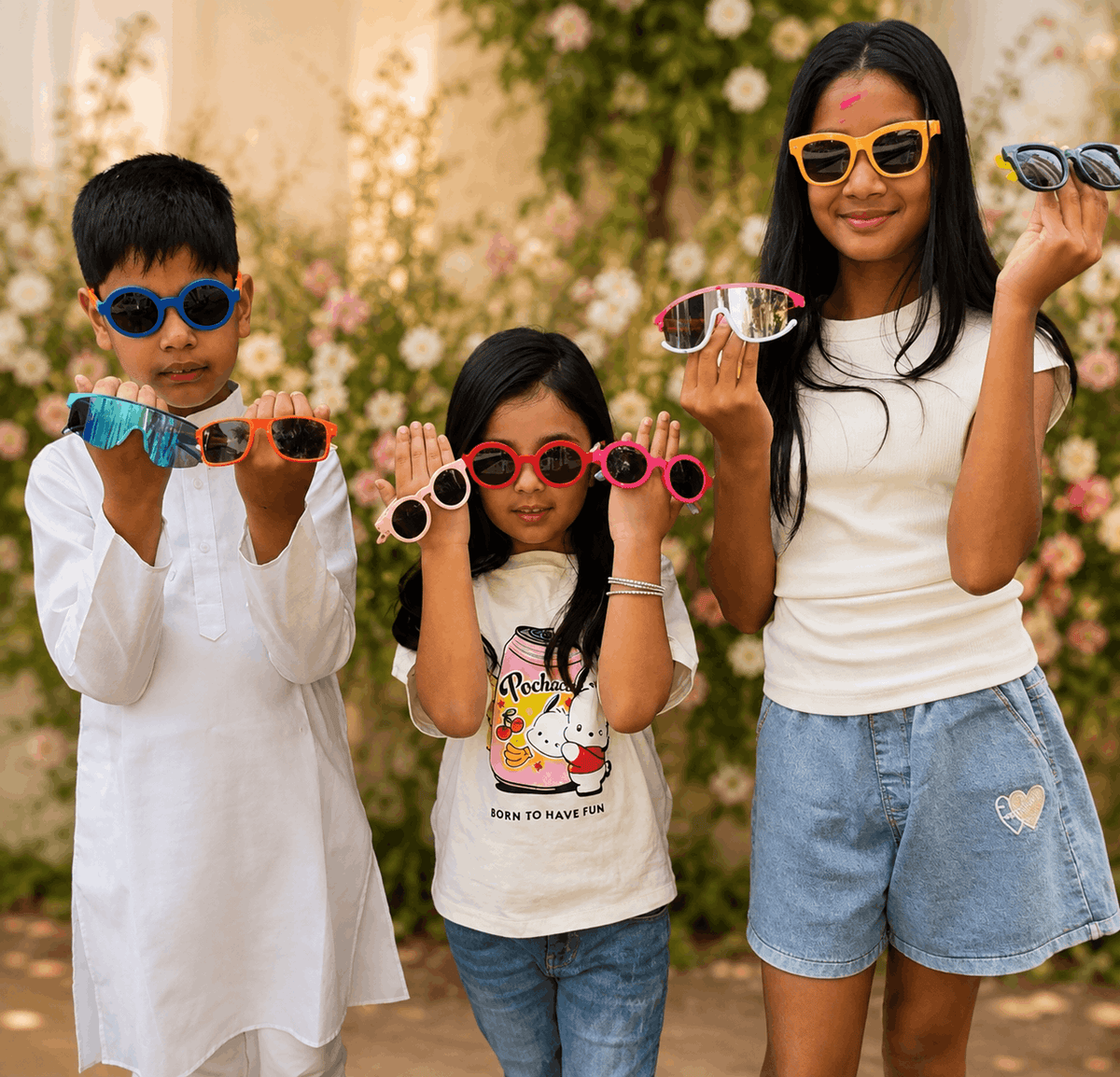
From baby to teen, the sunglasses sizes for kids are categorized into different age groups and mm groups. A wrong sized pair of sunglasses can cause discomfort to the child and may cause them to resist the eyewear.
As a result, their eyes become prone to the harmful UV rays. While this can create major problems later on, you can avoid this by ensuring that the sunglasses fit perfectly on your child's face.
To do this, however, you will first need to understand the kids sunglasses size chart. Although this chart may look a little overwhelming due to some metrics involved, we are here to simplify it for you. In this kids sunglasses size guide, we will discuss why it matters, how it works, and how you can measure your kid's sunglasses size at home.
Kids' Sunglasses Size Guide by Age
By checking kids sunglasses based on how old they are can help you get a better idea of which size is ideal for which age. You can check out the table below of kids sunglasses size chart to better understand the distinctions between sizes.
Why the Right Sunglasses Size Matters
Kids sunglasses fit is essential as it ensures maximum comfort, complete eye coverage and UV protection. Not to mention that if the fit is either too tight or too loose, then the child is likely to resist sunglasses.
Oversized frames risk sliding down the nose, whereas smaller ones may feel uncomfortable on the face. Therefore, you will need to choose the sunglasses based on the current head size of your kids. The right fit ensures that the sunglasses fit comfortably, and kids actually enjoy wearing them.
How Sunglasses Sizing Works: The 3 Numbers
Kids glasses sizing revolves around three parameters, including lens width, bridge width and temple length. These parameters are different for children in each age group. For example, baby sunglasses will have a smaller size compared to toddler sunglasses.
To help you better understand this, we have thoroughly explained the factors of how sizing works below.
1. Lens Width
This is the horizontal width of one lens. This width determines how wide the lenses, and thereby the frames, will be of the sunglasses. For babies, the width is typically 38-40 mm, and the range increases to 50-55 mm for teens.
2. Bridge Width
The bridge is the central part of the frame that connects the two lenses. The width helps to determine how wide or close the lenses sit to one another on the nose. A wider width can cause the glass to slide down the nose and may even create discomfort.
The bridge width is usually 12-14 mm for babies but increases to 16-18 mm for tweens.
3. Temple (Arm) Length
Temple length, also referred to as frame length, measures the length of the arm's frame from the hinge to the tip. To ensure that the eyewear is comfortable to wear for your kids, you will need to select the right arm length.
While the right arm length is essential, for babies and toddlers, adjustable straps or head straps can keep the sunglasses securely in place.
How to Measure Your Child at Home
The head sizes of children vary from one another, not to mention that they also grow as kids ages. Due to this, understanding how to measure your child's head size becomes essential.
By following the steps we have listed below, you will be able to pick the right sunglasses size for your child's face.
1. Measure Face / Head Width
In order to measure the face size of your child at home, you will need a millimeter ruler or tape. With the ruler, measure the temple-to-temple length, then the bridge width and temple-to-ear length.
As per these measurements, do ensure that the frame does not extend past the size of the face. Additionally, measuring pupil distance is also recommended as children's eyes grow fast.
2. Use an Existing Pair
If there is an existing pair of glasses lying around your home, you can get your kids to try them. However, do ensure that the pair is actually kids size glasses, and not adults. If the pair fits well, you can read the three mm numbers and choose the new eyewear according to them.
3. Size by Age
If you find measuring head size difficult, then you can also measure the size by age. However, do note that face circumference is a more accurate measure compared to age for kids' sunglasses size. This is because children's head sizes can vary even if they are of similar age.
Kids' Sunglasses Size Guide by Age
By checking kids sunglasses based on how old they are can help you get a better idea of which size is ideal for which age. You can check out the table below of kids sunglasses size chart to better understand the distinctions between sizes.
Baby & Toddler Sizing Tips
When choosing baby sunglasses or toddler sunglasses, there are some essential factors that you need to consider. These factors include ensuring that the eyewear has straps on the arms so that it does not slide down the nose or fall completely off of the face.
Furthermore, ensure that the frames are flexible so that a little wiggling does not cause them to break apart. Choose lightweight sunglasses as they are more comfortable for kids compared to those with slightly heavier materials.
Signs of a Bad Fit
Aside from the factors that we have mentioned above, you will also need to avoid some common mistakes when buying sunglasses for kids. Make sure that the sunglasses you choose are labeled with UV400 or indicate 100% UVA/UVB protection. This is essential because children's eyes are more sensitive to sunlight than adults'.
If the sunglasses pinch behind the ears or their frames leave marks at the temples, then you will need to opt for a bigger pair. On the contrary, if the eyewear sits crookedly on the nose or keeps sliding down, then it is a little too big for your kid.
Keeping the Fit Right as Kids Grow
While sunglasses can provide UV protection and help reduce glare and brightness, a single pair will only last a couple of years. This is because as kids grow, their face sizes change as well, causing the sunglasses to become uncomfortable, even it might have fit perfectly a year ago. For example, baby sunglasses are designed for infants 0-24 months.
However, this does not mean that you should just throw away the old pair. You can use the old pair to verify the measurements of your kids face. Make sure that your child is comfortable wearing the new pair and that the glasses have complete UV protection.
Frequently Asked Questions
What size sunglasses for a 1 year old?
For babies that are one year old or younger, it is best to opt for XS size sunglasses with around 38-40 mm lens width. Also, glasses with straps can secure them to the baby's face.
What size sunglasses do kids wear?
The size of sunglasses for kids can vary depending on their face measurements and age. Generally, 38 mm to 40 mm is the ideal lens width for babies and 50 mm to 55 mm for teens.
How do I measure my child for glasses or sunglasses?
To measure the size of glasses or sunglasses for your child, you will need to measure the face's width, going from temple-to-temple, and find a pair that best matches this number.
What size sunglasses for a 12 year old?
Large size or 48 to 52 mm width is the typical size of sunglasses for kids this old. However, you will need to confirm the face width to find the right size for your child.
Is 52 mm big for sunglasses on a child?
A 52 mm lens width is typically ideal for older kids and tweens, but it might be a little large for younger kids and may result in slipping off the face.
Conclusion
The right size for kids sunglasses means striking a balance between comfort and protection, all the while ensuring that the eyewear stays on the face. A wrong sized sunglasses will cause discomfort to the child and will cause them to resist wearing the eyewear altogether. Convincing kids to wear something that they don't like is going to end up in failure. Therefore, make sure that you measure their face before gifting them with a pair of sunglasses.
At Sunkissed Eyewear, we offer sunglasses for kids of all ages in styles and designs that they genuinely love to wear.
AI content checked by ZeroGPT:

