

Are Cheap Rs 200 Kids' Sunglasses Bad for Their Eyes?
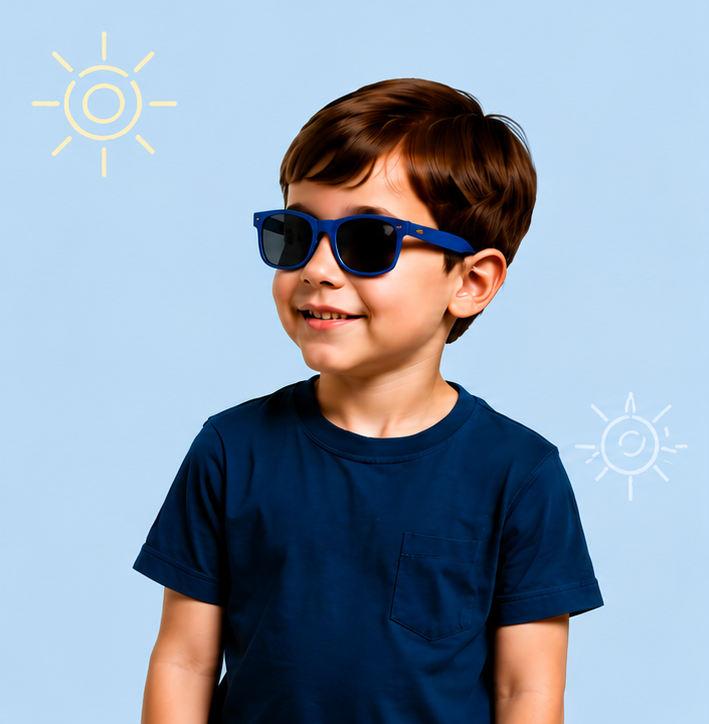
It is generally hard to resist a cute, colorful pair of sunglasses being sold for Rs 200 at a local market or toy shop. But the real question is: are cheap sunglasses bad for kids' eyes, or is it just a myth?
The answer depends on one thing, i.e., whether your child’s eye safety is a priority for you or not. If yes, you can ensure this by picking kids’ sunglasses with a “UV protection” feature, which is usually not available with cheap dark-tinted sunglasses.
Yes, cheap sunglasses are actually more harmful than wearing no sunglasses at all.
The Short Answer
Lower-priced sunglasses do not automatically mean that they are bad. But what actually makes them harmful is their dark lenses without proper UV protection. A single pair of sunglasses that provides 100% UV protection or UV400 is way better than ten cheap sunglasses.
Believe it or not, they make your kid’s eyes worse because dark lenses can increase UV exposure instead of reducing it.
Why Dark Lenses Without UV Can Be Worse Than Nothing
As a parent, you should be aware of the fact that dark lenses lack UV protection unless otherwise specified. Non-UV lenses change the way your eyes react to light. Hence, they can pose a risk to your eyes.
The Dilated Pupil Problem
When kids get exposure to sunlight, dark lenses make their pupils become larger, allowing more light to enter their eyes. When the pupils are enlarged, they take in more harmful UVA rays and UVB rays while directly impacting the retina.
Certified ophthalmologists also agree that cheap sunglasses do not protect against UV radiation, making them even more harmful than wearing no glasses.
Why Kids Are at Higher Risk
Kids' eyes are at a developing stage. Their pupils are larger, and lenses are clear, making a perfect environment to let in more UV rays.
- Their eyes can let in up to 70% more harmful UV rays as compared to adults.
- An individual tends to spend most time outside during their childhood days.
- Kids under the young age of 10 have comparatively sensitive retinas.
Collectively, these factors make UV protection more important for kids than adults.
What Cheap Sunglasses Often Get Wrong
The real issue here is not the price; it is what is actually missing from most cheap sunglasses. Now, let’s find out why protecting kids’ eyes is worth the investment and what cheap sunglasses often lack:
No Verified UV Protection
Local markets are often filled with toy sunglasses that actually do not have a genuine UV rating. Besides, polarized lenses may reduce glare and improve vision quality, but dark-tinted sunglasses do not guarantee UV blocking. Even if they come with a UV protection sticker, you cannot trust their authenticity because most stickers are fake.
Poor Lenses & Unsafe Materials
Some other telltale signs of fake sunglasses are their poor lenses and use of unsafe materials. Cheap or low-quality sunglasses can cause way more trouble than just UV exposure. Their long-term use can cause:
- Eye strain
- Headaches
- Cataracts (The eye’s natural lens gets clouded, leading to blurry vision)
- Macular degeneration (An eye disease that harms central vision, due to which you may not be able to see fine details clearly)
- Photokeratitis (An eye condition that takes place when your eyes get sunburnt, causing pain, redness, and eye sensitivity)
Besides, their brittle frames and poor-quality lenses can easily shatter, causing choking hazards.
How to Tell if Kids' Sunglasses Are Actually Safe
For those wondering whether kids' sunglasses need UV protection, the answer is yes. Here’s a checklist you must adhere to while buying kids' sunglasses:
- Instead of buying a street vendor sunglasses pair, shop from a reputable seller.
- Check for a “UV400” or “100% UVA/UVB-Protection” label.
- Be sceptical of unlabeled, counterfeit, or toy sunglasses.
- The retailer from which you are purchasing adheres to the eyewear regulations set by BIS.
- You can also consult an optician to verify the UV protection factor with a photometer if you’re unsure of the same.
- Go for frames that include polycarbonate lenses. These are not only lightweight, but also shatter-resistant.
- Check for ISI or basic safety marking, where available.
Cheap vs Affordable: You Don't Need to Overspend
Inexpensive doesn’t always mean a lack of value. At times, a comparatively expensive lens may offer the same features as a Rs 200 sunglass.
Here, your focus should not be on price; instead, it should be on rejecting the one that is unsafe and picking the one that offers assured UV protection. In India, you may find affordable sunglasses options with certified UV400 lenses and safe materials.
Hence, instead of wasting Rs. 200 on a useless purchase, spend a little extra and purchase UV-protected sunglasses from a trusted seller such as Sunkissed.
Frequently Asked Questions
Are Rs 200 sunglasses safe for kids?
They can be, but only if they provide UV400 or 100% UVA/UVB protection. Unrated or unlabelled tinted lenses can be worse than no sunglasses, because it exposes your child’s eyes to more ultraviolet (UV) rays by making the pupil larger.
Can dark sunglasses without UV protection damage a child's eyes?
Yes, darkened lenses make the pupil wider and expose your eye lens to let in more UV rays instead of blocking them. This is the reason why harmful UV rays reach the sensitive retina, thereby damaging your child’s eyes.
How do I know if my kid's sunglasses have UV protection?
The best way to figure this out is by looking for the UV400 or UV400 or 100% UVA/UVB label and purchasing the glasses from a trusted seller. Besides, you can ask an optician to check the lenses with a UV testing device.
Do expensive sunglasses protect better than cheap ones?
Not always. Expensive doesn’t always mean it is better. Though price may hint towards better frame quality, comfort, and other factors. UV protection is another essential factor that makes the sunglasses better. Hence, always look for a product’s certification to know whether it is better or not.
Are toy or novelty sunglasses safe for children?
Unless they have a certified UV-protection label, treat them as toys, whether new or old. Sunglasses without any such label are only meant for play, not for protecting against harmful UV light.
Conclusion
The biggest risk isn’t the cheap price tag; it is the sunglass that comes without a UV protection feature. If you are truly concerned about protecting your kids’ eyes from getting damaged due to UV radiation exposure, choose a sunglass with a UV400 or 100% UVA or UVB protection label.
Browse the Sunkissed Eyewear collection and find affordable UV400-protected designer sunglasses for your kid available in different colors, sizes, and styles.

